Have I grown old? The dreams for getting into roadies ended before starting. I could not even get into auditions. I don’t know why wish to sound like a loser as if I desire to garner some sympathy votes. But this sucked. All those years, I could not get into this because I was studying in a small town (town? Or was it village?)called guwahati where there were no auditions for roadies or for that matter any other show. But now it was in my own city, New Delhi. It was my first and perhaps last chance. Last chance like for so many other activities such as Indian Air force. I knew the place too, and yet I missed it.
The other day I was discussing about audition with someone, and his first reaction was, ’dude , you are old now for all this.. you have too many other things now which you can’t just leave get your old fat ass into roadies!’. I hate to admit, he turned out to be right. I did not take off today. Dunno what came on my head that I cancelled my leave and came to office. If hadn’t done that I would have been there at audition on time. But the thought that stopped me for heading for audition was a sense of duty for reporting test, for the greed of saving one day’s pay, these things have indeed rendered me old enough no to have courage to do something else. But I don’t want this to happen. I am all of 23 for Christ’s sake and I feel old and tied in duties and responsibilites? Then what should people of my dad’s age do?
Some people were suggesting that I should tell about this audition in office to my manager and other colleagues. But do I have to? Rather should it not be little awkward? It’s like a movie I go to on some night, and telling the same at work? No. and I am not doing anything wrong. I have not been dishonest with my work. I gave it extra hours whenever it demanded. It’s like if I am wedded to my work, then I don’t commit adultery if I attend some of my other interests too.
fun and work @ work place
There are two conflicting school of thoughts in my mind about balancing fun and work at work. One of my colleague reminded (because Siddharth had told me about the same sometime) me today of British or (generally) western style of working. Brits work only during office hours of 9-5 whatever is that time window of 8 hrs is. But during those 8 hours, all they do is work. They don’t waste time or should I say, spend time on activities which are not related to work. But as their 8hrs are over, they rush to home or anywhere but office.
I also like that kind of working atmosphere and ideally I would have worked like that only. But if I work like that focusing only on my work, will I not be considered aloof? I am seeing people huddled in one cube, may be sharing some sweets or some joke. Should I not press Windows L and leave my desk , go and join them? If I do that I will be loosing time close to half an hour. Because after that entire party might move to terrace for sharing puff and coffe. Such occasions will occur several times in day. So everyday, I will lose considerable time, which if I had put in work, I would have wounded up my work early and left early and could find time for host of other activities. But if I come to office, work and leave, and continue this for long, will I not be considered aloof by my colleague. At any new work place, one would like to make new friends and make the friendship closer. But that would not be possible if all I do in office is work.
Where to draw line?
That colleague of mine told that it’s all in mind. Ultimately, if one speaks politely to a colleague and asks for help, he will be helped, and what more one expects from a colleague.
I wasn’t fully convinced with this to accept completely the new style of working. Even though I actually work in that style to a great extent unconsciously for some reason.
Yet after this discussion I fail to find where to draw line, which school of thought is good for me. Perhaps someone reading this might be able to suggest. I feel that it solely depends on person and his abilities. Sachin for example, can talk to all his friends/colleagues, afford to join in any number of puffs or TT games and still be able to finish work on/before deadlines. I on the other hand will have to compromise on one thing to achieve the other.
Little conversation with Sardar Ji auto wale
I was struggling hard to reach Noida for the first time through this new route (yes, I did cross check it pronunciation on wordweb just now. And it did not sound as absurd in the American voice of wordweb as it bleeds when people in my office make pronunciation ) to India Gate. Here we had this sardar ji who was driving auto-rickshaw next to me. I was pissed off with heat of the day and frustration and fatigue of biking, and already I had sun burn so far. I asked this auto guy the way to nizamuddin bridge. He was very considerate and explained me the way with great patience. There was huge traffic jam and we had enough time to for a small conversation. Sardar Ji too needed someone as much as I did to distract oneself away from the frustration of traffic, heat and driving. He said,”sardar ji uranium manga rahe hein desh ki bhalai ke liye”. I was amazed at his interest and knowledge about country’s problems and politics and his flair for technological-infrastructure projects. He told that coal will not be able to solve the country’s problem of power. He pointed to the thermal power plant near Pragati Maidan and asked how long and how many people that could serve. Another lovely thing of this little chat was his addressing Prime Minister Manmohan Singh as ‘sardar ji’!
Affection for South Delhi
South Delhi
What the hell is the deal with ‘South’? South of India has always been considered as the literate India. And indeed the culture of Bangalore is quite different than any north Indian city.
Now I read this news that residents in South Delhi are planting saplings in the rainy season. I wonder why only in South Delhi. I guess in places like Sagar Pur (again, first word that comes to my mind while thinking of non-posh localities is Sagar Pur!, after all this is where I have been residing for ages). People are firstly not educated enough to realize the importance of greenery/plants. But I do believe that being humans, they like green clean areas as much as any South Delhite would do. But then in our part of Delhi, we don’t have open spaces enough for raising plants and trees. People do not find place to park their cars. Where will they plant? Also, so many people in New Friend’s colony and other colonies of posh south Delhi do planting as a part of their hobby and this hobby is as fashionable as reading Atlas Shrugged or giving baths to puppies in homes for dogs or sipping red wine on a brunch! In Uttam Nagar, Raghu Nagar, and in most of pur’s and nagar’s of Delhi, people will not have these fancy ideas/hobbies. Their world is different. They will rather gossip, watch soaps, or reality shows or 24-hr news channel and sit putside their homes in the evening. So it will take quite some time before these things catch up with my world. Yes, no matter how much I earn, which fancy hotel I dine at, which posh crowd I party with, I will still belong to Sagar Pur, this name will reside on my passport and ration card for a long time. It is this Sagar Pur where I grew up in. Mentally, I might not feel at times that I belong here, like many of NRI’s might not feeling like belonging to India. But practical fact is that I am Sagar Purite!
McDonaldisation!!
Ah! finally I got time to write! after ages.
India , one of the oldest civilizations, is slowly changing itself so much that cultural heritage will soon reduce to a word in history text books.
I had joined music classes some time back. Students who would learn music with me were of the age like 5 or 6 or sometimes perhaps 4 also! These kids learn Hindustani classical music in English. The teacher gives them notes as Sa Re Ga Ma. And this is true for students from any community, there were lots of Bengali and north Indian kids there. They all learn music in this way. People in so many states are fighting to get a ‘classical status’ for their language, but what is the use of that status if the language that gets that status is not considered ‘cool’ by the community that was expected to encourage its use. Already, so many languages of the world have become dead. But most of them became extinct because the people speaking that language became extinct. But in our country, number of people capable of speaking Indian languages is always on an ever increasing trend. Hence, it will be shameful if Indian languages become obsolete.
This also reminds me of another interesting trend in the ‘upwardly mobile and progressive’ society that is flourishing in satellite townships of Noida, Bangalore, Gurgaon etc..
Yesterday my mentor told that he bought an alphabet primer for his few months old kid. The book has alphabets as:
P for Pizza
C for computer
B for burger
and perhaps I for iPod!
I might be accused of acting like French (who, it is said, dislike anything American, like our very own Left) or some anti-progressive jerk, but what kind of nature loving and healthy kids we raise if they learn of Pizza before identifying a Parrot and they see Burger before getting excited to play with a Ball
जोधा अकबर
Finally I finished watching Jodha Akbar in 3 days! watching 15-20 mins for the first two days before I would get to sleep, but on second day the music impressed me a lot and I could not wait to watch the entire movie.
What can I say now? Movie is a brave attempt on part of director. But again lack of knowledge and research was evident, as is the case for most of bollywood movies. There were tribals.. typically from North East dancing in the show put up for Akbar. What the hell were north eastern Indians doing there? I thought director thought to include them in the dance show to make it look grand!
But no doubts, the music was really imposing, particularly the background score. It was indeed AR Rehman music. And it had the grandeur needed for the royal story. It did remind me of mughal-e-azam. Of course one falls short of wards to describe this music. It’s really nice to see some film makers and musicians do not shy away from having classical music. Effective use of sitar. But the lyrics were not great in most of songs.. Manmohana could have more touching lyrics, it was really straight forward colloquial of current times.
Most of the movie had scenes in day light. Some scenes look good in night. The dance show could have been put up in lamps and candle lights rather than in bright sun… I mean there were so much of tents pitched up around in that dance show.. it looked as if we were watching the sets themselves. Compare that too ‘Mohe panghat pe’ from Mughal-e-azam.
I guess image of one grand thing of past can just not be erased by any number of newer versions in the recent times. Like original ramananad sagar’s ramayana is still fresh in our memories, and still looks much more real than all the clones made after that. Similarly, comparison of Jodha Akbar with K Asif’s master piece is inevitable.
In terms of communal harmony, they could have shown more. In the end Amitabh bacchan says this was the story of Jodha Akbar. I am sure there could have been lot more to that. The movie in fact showed very few instances of their love.. most part was about war and politics. In the old movie.. we also saw Akbar celebrating Janmashtmi, can giving rides to bal gopal krishna.
But anyways , this was indeed different.
रामायण

I was watching रामायण after very long. I guess last time I watched it was when I was in class 8 or something. Here mummy is alone at home, so to give her company, I watch it. I found that even today, when so many hindi films have been released since Ramanand Sagar’s रामायण , still this one carries so much emotional value. I feel moved to tears in many scenes. Unlike Mahabharat, रामायण is story of so much love and affection . One can notice the word ‘sneh’ umpteen number of times in one episode. One really feels like having cleaned his mind and heart of all vices. Every character in the story (ofcourse barring few – kakayi, manthura and those from Ravan’s camp), have so much love for each other. Every one’s fighting to give comfort to some one else. I feel that Ram’s age must have been the most peaceful and stable times on earth.
Timing of my realization of these things is pretty apt. I mean very recently Karunanidhi questioned the existence of Ram. He was giving some arguments that he claimed were rational. Even I am myself a computer science graduate. But still I feel influenced by these mythological stories. At least they are putting in us some fear for god, some fear from doing fallacies. If he wanted to make bridge, then he should have gone ahead, but not by inciting people by attacking faith of people. I remember once I was complaining to an Austrian Professor that in India, some rivers get polluted a lot because people put dead bodies and other things in the reiver for religious reasons. Then even that chap, who was complete foriegn to hinduism and mythology replied,”But people have faith in that. It’s the question of faith.” And Karunananidhi is from south India, the land, where we can find most religious people in India. Even that bridge is ultimately for welfare of people, then it is actually service of God, people would not have complained if that new bridge is making the lives easier. But it is crap to say things about Ram sethu or for that matter Ram’s existence per se, as this was all uncalled for. It’s like if we can build a hospital for destitute by breaking some temple, then it should be fine. But we should not break the temple because we don’t believe in the deity worshiped in that temple. May Ram give some sense to these morons.
double standard, glorified.
July 24, 2007
Some prominent media houses give following headlines :
NASDAQ : “Suspect Haneef’s Clean Chit To Australian Federal Police “
The Times of India : “Diary notes are mine, not by cops: Haneef”
Times Now : “Haneef gives a clean chit to AFP “
Yahoo News / CNN-IBN : “Haneef says Oz cops did not doctor his diary”
July 30-31, 2007 : When Haneef is back in India, here’s what we see :
The times of India : “Haneef wants Australia to apologise”
The Hindu : “Haneef: I am a victim of Australian conspiracy”
This sudden change in the Hanif’s attitude is quite visible through headlines!
bangalore – glass house?
It’s been more than a month since I moved to Bangalore. A lot has been said ans written about this so called silicon valley of India. Here’s my contribution, my first hand experience. My office is on the Airport Road, right across Leela Palace. I thought this must be the most happening place in the city. Soon my illusions were over when I saw the map and discovered that actually we are far from the hip hop spots of Bangalore. Most of the services have their centres far from here. Near to this area, I once saw a mini La Defense. The place around that golf course had all the brands of IT one could think of Microsoft, Yahoo, HP Google and what not? In erecting these high rise posh buildings, people behind all of it, forgot that India has a weather different from that of countries where these glass houses are a norm for business houses. In my own office,
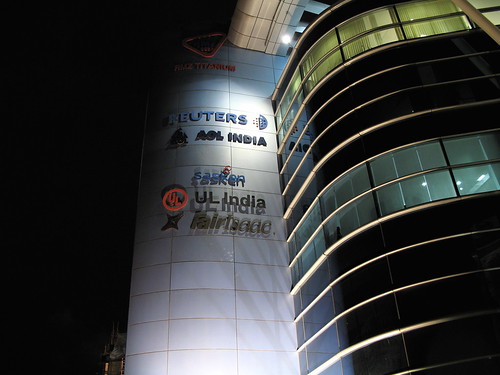
in spite of state of art air conditioning and climate control system, I feel sultry in the noon if i am sitting next to a glass wall exposed to weather outside. So, those feeling awestruck (as I felt when I DLF building for the first time while going by Gurgaon road) by the sight of glass buildings, do have a heart for how it feels behind those glasses!
India’s Educational policy
India’s Education Policy
Ours is a land which was a centre of learning for centuries. But since independence to this day, we have been facing challenges in achieving the goal of making India an educated state. On one hand nature of such challenges has been the same. For instance even today our goal of making primary education accessible to one and all, is far from being achieved. At the same time, challenges have taken more complex form today. Rewriting of history books with every new government and lack of funds for making higher education available to the rapidly growing population (whose size has gone through enormous increase) need intelligent strategies to deal with. This paper is not going to present a dismal picture India’s educational policy by giving an array of statistics, which is any way known. Nor will it mention a positive interpretation of such statistics in the way websites of Sarva Shiksha Abhiyan and National Literacy Mission boast of their achievement. It will rather describe the handicaps, plaguing the policy makers in the matters pertaining to education, and some plausible solutions, and some threads opened in the paper will be kept open for the readers to close them, for the author failed to obtain one feasible way for the same.
Moving in the natural order of development of a human, primary education sows the seeds of growth. The desire of providing free and compulsory education for all nurtured in our constitution and in the minds of gentlemen who drafted it. Even today, 59 million children out-of-school and another 90 million in school learning very little[1]. We have plenty of villages where there is no school nearby. Government of course has a big role to play there. It should figure out all such villages and start a rapid movement of sort to install one primary school in each such village. In fact there should be one primary school within 1km radius. This goal of government is yet to be completed. To begin with, we can arrange for only few teachers, who should be paid more than their counterparts serving in the towns and cities where there are more number of teachers to share the burden. This won’t need much infrastructure. Of course black board education of such kind is not as effective as with some visual aids, but the whole idea is to make the kids literate, to prepare them for further education, to avoid their exploitation at the hands of the rich and slightly literate people of village, so that they don’t suffer the same plight as their parents. And we should not expect all the latest technology to reach in every village of our country overnight. But nor can we wait for that to happen. We must understand that literacy is as important as food or cloth. Only if a person knows basic mathematics, reading and writing short simple statements, needed in every day life, in one language, can he expect to secure some kind of employment in a country of 1 billion crippled with unemployment. He needs this literacy to get onto the right bus, to read before signing on a paper and virtually in every circumstance which is going to affect his life.
Apart from the government initiatives, we need more people like Magsaysay award winner Sandeep Pandey, who gave up his job of teaching at IIT Kanpur and came to a dalit village of Lalpur in district Ballia of UP, where despite all odds , he opened a school and took concrete steps to alleviate poverty. This happened in a village where even candidates of State Assembly elections made no commitments. Government has to later on make reservations for these dalit children. Why does it not educate them at primary level itself as to make them natural competitors with students belonging to general category. Here when situation is so grim that whole village is not able access a school, then will the government make reservation for the entire village? Why should it rather not open a school or two there? Government can’t always be relied upon for two reasons. Firstly, sometimes (though it happens very rarely) to focus all all areas at one time or it suffers from lack of funds. Secondly, government servants don’t want to serve the areas where they won’t benefit much in terms of votes or money through corruption (and this one happens more frequently).
Primary education suffers not just because of their lack of availability in rural India, but also on other grounds as well. Quality of that primary education in one such issue. It can be measured by learning levels of those attending primary schools. It is found that 40.2% of class 5 kids could not read class 2 level paragraphs and 56.6% of them could not perform subtraction sums [2]. If something could be done here, then it is the change in teaching methodology. Kids should be taught in a natural way of learning. For example, the most natural method of learning basic arithmetic is counting. A mother can ask her child to count the number of potatoes left in a basket after she put some of them aside. There can be more effective methods. We need to constitute a committee of experts in pedagogy, urgently to make suggestions in this direction with in a time frame, so as to implement new methods of teaching by the next academic session. Idea is to start looking for a solution as soon as a problem is identified. We need our government to give up its lethargy at least in the education sector and start working towards quick and effective solution.
Another area where work needs to be done is decreasing the dropout rates and increasing the number of enrolments per se. Firstly, we should understand that at times we have parents themselves wanting their kids to work and at other times kids themselves find going to school a boring task and would rather prefer working. Many factors contribute to this, frequent absenteeism of teachers (who are in fact better paid as compared to their counterparts in private school), inferior methods of teaching, making learning a tedious task and lack of infrastructure. For this constant monitoring of working of schools is essential. For instance, 25% of teachers were absent from school, and only half were teaching, during unannounced visits to a nationally representative sample of government primary schools in India. [2] It is worth mentioning that midday meal program of government of India is doing really good job by pulling the kids to school, and parents also find a reason to feel convinced to send their ward to school. But in the cases of working children, first solution is banning any form of child labor. Non Formal Education is a good but still a temporal solution for imparting education to working children. But here bottom line is that all good measures should be continued with more zeal.
Moving to middle and secondary school education, it also faces problems similar to those enlisted above for primary schools. There is an urgent need for a state-private partnership. Where there are government schools, education is very much subsidized. A monthly fee is on an average Rs.70 from class VI to VIII. In spite of that number of enrolled is far less than the expected. In such situation, we need huge awareness amongst the parents about value of education so that they can send their ward to school. But as we notice every year that it is the private schools that outperform the government schools not just in terms of results of public examinations but in the competitions pertaining to co-curricular activities also. So private schools should now realize their social responsibility and allow poor children to be part of their so called elite club. Or else rich children won’t have the experience of studying together with the kids from economically poor background, of sharing the joy of learning together. A sense of equality will then never be ensured in the growing minds.
Also in schools, student should not compulsorily taught Hindi. Two languages – their mother tongue and English should be enough. It’s important students enjoy reading and writing in their mother tongue also, that will help in the development of regional languages and literature and cinema.
Another concern about school education is changing of textbooks , particularly history textbooks, according to the whims of current political power at centre. NCERT and related organizations such as Indian Council for Historical Research should be given autonomy. Religion should also be kept strictly separate from education. In this wake, all RSS schools and madrasas should be closed, but then each community has been given constitutionally, the right to preach and propagate its religious beliefs. Some solution has to be thought to balance the two.
Higher education sector is the one that finally fuels the economic growth. America has more proportion of population going to higher education than any other country. No wonder it is the biggest economic power today. Moving focus away from higher education to work on primary education is something impractical. In Professor C.N. R. Rao’s words,” I don’t think that we should wait for all people to become literate before we improve our universities”.
The biggest problem we are facing today in the area of higher of education is the greater role of state in it. Either state should provide educate funds or otherwise let the colleges charge the fees that is some where near the actual cost of education, rather than heavily subsidizing it. In IIT’s, hostel rent per semester is Rs.500. At no place in the world can one find a room for Rs.500 for four months. Medical Fees per semester is Rs.100. This despite the fact that one time consultation fees of doctors these days itself is Rs.100. These were just a few examples to present an idea higher education is subsidized in our country. But in these colleges of higher education, children of industrialists and IAS officers also study. There are in fact plenty of students who can at least 2 times what they are paying now. So such students should be charged more. In fact, we can have a federal fee structure, like income tax rather than fix it for all (of course except students from SC, ST and OBC). The idea is to charge fees proportionately. This way, the dilemma of excellence versus access and quality versus quantity can also be solved. Because if government lacks funds, then in order to cater to the needs of growing for higher education, government will create more institutions or increase more seats in the existing institutions. In either case, it will result in decrease in over all quality and excellence, for the total funding is still the same.
We must also learn from the education system in developed countries. Private universities have been a great success in United States. Top 5 universities of the world include 3 private American universities. Of course, that success can be attributed to America’s economy being capitalist in nature, and we can’t have complete privatization of higher education, but still considering the high cost incurred in the education of a single graduate, and growing demand for higher education, government can just not hope to do it all by itself with the current total spending on education being 4% of GDP. Emergence of world class private institutes is inevitable. Indian Institute of Science and Tata Institute of Fundamental Research were also visions of industrialists and scientists. And these institutes have produced some of the nation’s finest researchers and scientists. Recent establishment and good performance of private institutes like Dhiru Bhai Ambani Institute of Information Technology and Jaypee Institute of Information Technology are also positive signs. Other business houses should also take lead in this direction.
The public sector institutes of learning like IIT’s, NIT’s , AIIMS and IIM’s should also depend lesser and lesser on government. Rather, they should generate their endowments through research and consultancies. These institutes should change their image from lethargic universities to that of profit making and fiercely competing companies. Competition always leads to good quality. For this very reason, we should allow FDI in education. If MIT opens its campus here, people would consider that also as a good option. This would reduce the pressure on several hundred thousand students, appearing each year for admission tests of various elite institutes, only a small percentage of which constitutes the finally selected students. But a constant vigil on all universities and colleges , particularly those in private sector is needed. Because we have private universities like Amity whose directors have been issued warrants against them. Even the Delhi Government’s Indraprastha university has so many small colleges affiliated to it which hardly have infrastructure for the courses they are conducting. In places like Bangalore, Noida, Ghaziabad, Hyderabad, and Gurgaon , one can find plenty of teaching shops claiming to be colleges affiliated to several private or government universities. The elite institutes like IIT’s are catering to the needs of very small percentage of students. Thousands of other students clamor for admission to these lowly colleges. All such colleges charge hefty amount of fees. Such institutes need to be checked.
While discussing higher education, mention of much talked about reservation is indispensable. The simple argument against such idiocy is that if some method failed to achieve its purpose in spite of having used it for 60 years or so, then how can the same method be strengthened further an used to achieve that purpose? On the top of everything else, no school or college in India denies admission to someone because of his/her caste.
Conclusion
The goal of universal education can be achieved by opening primary schools in every possible place where they find utility. No kid should be denied primary education for the reason of non availability in the neighborhood. Quality of education is also equally important and can be ensured through reforms in teaching methodology and more accountability and transparency in schools. Dream of having high standard higher education for all can be a reality with the help of private hands, and with increased funding , more emphasis on research than just conducting examination.
 Gupta Goes Greek